
Every great content strategy starts with one simple reality: technology can accelerate your marketing, but it can’t replace what makes it work. In this guide, we break down how AI is reshaping content marketing, where it’s creating real impact and how to use it without losing the clarity, connection and intent that make your brand resonate.
Written by Christopher Melotti
You can’t scroll, search or create content today without running into AI.
It’s writing blogs. Generating ads. Powering search.
And reshaping how audiences discover, consume and respond to content.
But here’s the thing – more content doesn’t automatically mean better content.
Because while AI makes it easier to produce, it also raises the bar.
Audiences aren’t just looking for information anymore. They’re looking for relevance, clarity and connection.
They engage when…
- something feels tailored to them
- a message lands
- a brand sounds human, not manufactured
That’s where the real shift is happening.
AI is transforming the mechanics of marketing: faster production, smarter targeting, more data.
But the brands that stand out? They’re the ones who know how to balance that with strategy, creativity and emotional intelligence.
At Melotti Content Media, we’ve seen this play out firsthand.
The biggest wins don’t come from choosing between human or AI, they come from knowing how to use both, properly.
This guide is your roadmap to doing exactly that.
We’ll explore:
- how AI is changing the marketing landscape right now
- where it’s driving real performance, from ads to automation
- what’s happening with AI-generated content and why quality still matters
- whether human copywriting is under threat
- and how to build a smarter, more effective content strategy using AI
Because this isn’t about chasing the latest tool. It’s about creating content that works.
Content that connects. Content that performs. Content that moves the needle.
Let’s get into it!
Table of Contents
Chapter 1: The Big Shift: AI Isn’t Coming, It’s Already Here

AI used to be something marketers talked about in future tense.
Not anymore.
It’s already shaping the way brands show up, how content is created and how decisions are made behind the scenes. From the ads you see to the emails you open, AI is quietly working in the background – analysing, predicting and optimising in real time.
And here’s the reality: this shift isn’t gradual. It’s happening fast.
The brands that recognise it early are already gaining ground. The ones that don’t? They’re playing catch-up in a space that’s only getting more competitive.
So, what does this look like in practice?
AI is changing how marketing works at its core
At its simplest, AI in marketing is about using data to make smarter decisions, faster.
But in practice, it goes much deeper than that.
AI is now:
- automating repetitive tasks that used to take hours
- analysing massive datasets in seconds
- identifying patterns in customer behaviour
- and helping marketers deliver more relevant, timely content
What used to rely on guesswork is now backed by insight.
Campaigns aren’t just launched – they’re continuously optimised. Content isn’t just created – it’s refined based on performance.
The result? Marketing that’s more precise, more efficient and increasingly personalised.
It’s not just marketing, it’s reshaping entire industries
This isn’t a “marketing-only” shift.
AI is transforming how businesses operate as a whole, from customer service and sales to operations and strategy.
We’re seeing:
- smarter customer experiences driven by real-time data
- more accurate forecasting and decision-making
- streamlined processes that reduce cost and increase speed
- entirely new ways for brands to engage with their audiences
Marketing just happens to be one of the most visible frontlines.
Because when AI improves how a business understands and communicates with its customers, everything downstream changes too.
The gap is growing: fast movers vs everyone else
Here’s where the urgency comes in.
AI isn’t a competitive advantage anymore. It’s quickly becoming a baseline expectation.
Some businesses are already:
- using AI to scale content production without sacrificing quality
- refining campaigns in real time based on performance data
- delivering highly personalised experiences on a scale
Others are still experimenting… or worse, ignoring it altogether.
That gap is widening.
And in a landscape where attention is limited and competition is high, falling behind isn’t just a risk, it’s a reality for those who don’t adapt.
The takeaway?
AI isn’t something to “watch”. It’s something to understand, adopt and use with intention. Because the shift has already happened.
The question now is – what are you going to do with it?

Chapter 2: What AI Actually Means for Marketing (Beyond the Buzzwords)
It’s talked about like a magic solution. A shortcut. A silver bullet for better marketing.
But strip away the hype, and what does it do?
Because when you understand that, everything changes.
You stop chasing tools… and start using them with purpose.

AI in marketing, simplified
At its core, AI in marketing is about one thing: turning data into smarter decisions.
Not eventually. Not manually.
Instantly.
AI combines algorithms, machine learning and computing power to:
- analyse large volumes of customer data
- identify patterns and behaviours
- generate insights that would take humans hours (or days) to uncover
Think of it this way, where a traditional system stores information, AI interprets it.
It doesn’t just tell you what happened.
It helps predict what’s likely to happen next… and what to do about it.
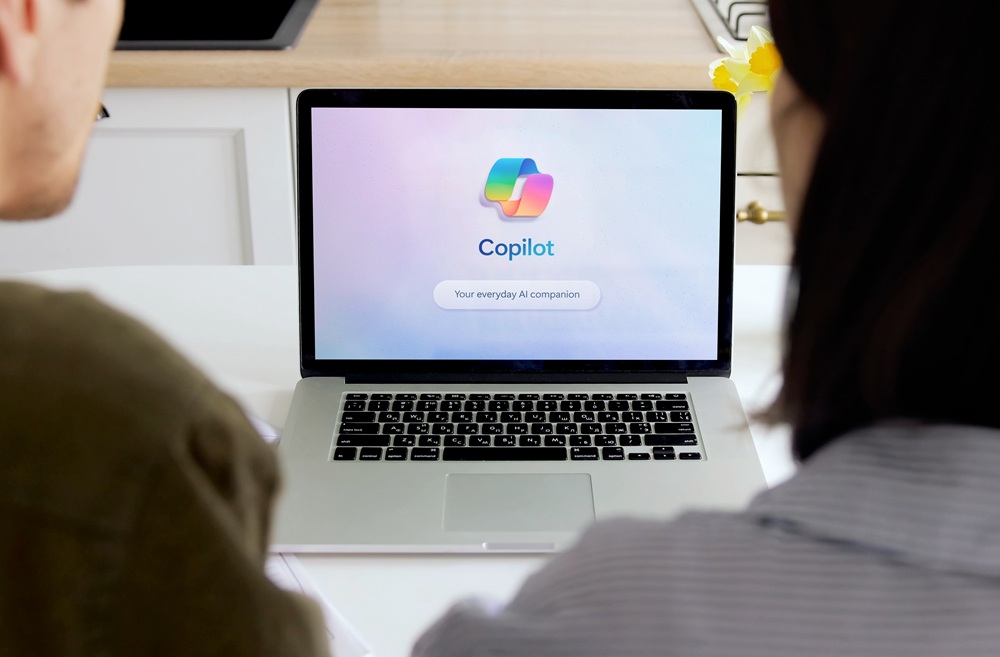
From manual to automated: the power of AI capabilities
This is where AI moves from theory to impact. AI is already transforming marketing through three core capabilities:
- Automation
Repetitive, time-heavy tasks are being handled instantly. From data entry to lead sorting, AI removes manual bottlenecks and speeds everything up. - Personalisation at Scale
AI can analyse individual behaviours and tailor messaging accordingly. Not just segments, but individuals. What they see, when they see it and how it’s delivered. - Predictive Insights
AI doesn’t just react. It forecasts.
It identifies trends, scores leads, prioritises opportunities and even suggests the next best action to improve results.
The outcome? Marketing becomes sharper. Faster. More targeted.

What this looks like in the real world
This isn’t hypothetical. It’s already happening. Take CRM platforms powered by AI.
Instead of manually reviewing customer data, AI can:
- scan entire databases in seconds
- rank leads based on likelihood to convert
- highlight high-value opportunities automatically
- recommend tailored engagement strategies for each contact
The result? Sales and marketing teams focus on the right opportunities, not just more opportunities.
In real estate, AI tools are already identifying when someone is likely to move based on behavioural signals – helping agents reach out at exactly the right moment, with the right message.
Across industries, the same pattern is emerging:
- better timing
- more relevant messaging
- stronger engagement
All driven by smarter use of data.
AI is reshaping marketing and raising the stakes
When AI starts filtering leads, optimising campaigns and guiding decisions in real time, marketing becomes a very different game.
It’s no longer about:
- broad targeting
- generic messaging
- or one-size-fits-all campaigns
It’s about precision.
AI is refining how brands connect with audiences – making marketing more efficient, but also more competitive.
Because when everyone has access to better tools, the advantage shifts.
It’s not just about using AI. It’s about how well it’s used. And that’s where strategy, judgement and human insight still matter more than ever.
Chapter 3: AI in Action: From Programmatic Ads to Smarter Targeting
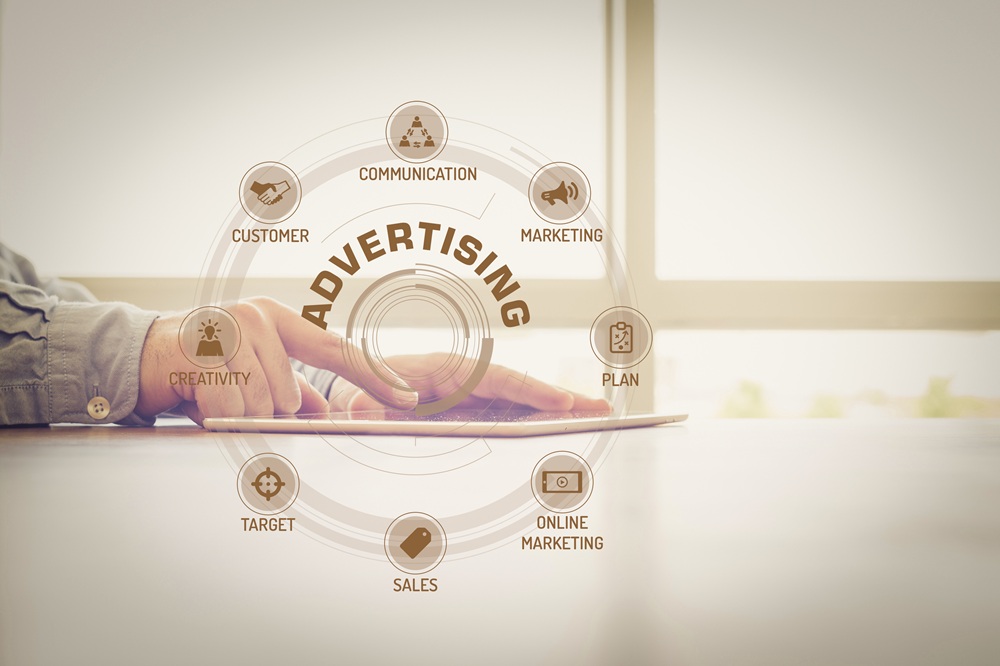
This is where AI moves from concept… to capability.
It’s one thing to understand what AI can do. It’s another to see how it’s already driving real marketing performance behind the scenes.
And nowhere is that more obvious than in how advertising works today.
Because what used to rely on manual decisions, negotiation and guesswork is now powered by real-time data, automation and precision targeting.
What programmatic advertising actually means
Programmatic advertising is the engine room of modern digital marketing.
Instead of manually buying ad space, marketers now use AI-powered platforms to purchase and place ads automatically – in real time.
But it’s not just automation for the sake of speed.
These systems are constantly analysing data to determine:
- where an ad should appear
- who should see it
- what format it should take
- and when it’s most likely to drive engagement
All within milliseconds.
The result is a far more dynamic and responsive approach to advertising, where campaigns aren’t static – they evolve based on performance.
How AI drives smarter targeting and bidding
Traditional advertising casts a wide net. AI narrows it with precision.
Through machine learning and predictive analysis, AI can:
- identify high-value audience segments
- assess user behaviour and intent signals
- predict which users are most likely to convert
- adjust bids automatically to maximise results
This means budgets aren’t wasted on the wrong audience or poorly timed placements.
Instead, ads are delivered to the right people, at the right moment, with a much higher likelihood of impact. It’s not just targeting anymore. It’s intelligent targeting.
From manual optimisation to real-time performance
In the past, campaign optimisation was reactive. Marketers would launch, wait, analyse results… then adjust.
Now, AI does that continuously. In real time.
It monitors performance, tests variations and reallocates spend automatically – all while the campaign is running.
That shift changes everything:
- underperforming ads are corrected instantly
- high-performing placements are amplified
- campaigns improve as they run, not after
The outcome is faster learning cycles and stronger results, without the lag.
What this means for ROI and content strategy
At a surface level, AI makes advertising more efficient.
But the real impact runs deeper.
When targeting is sharper and delivery is optimised, every part of the content strategy needs to keep up.
Because getting the right message in front of the right person is only half the equation.
The message still needs to land.
AI can:
- improve reach
- reduce wasted spend
- increase conversion opportunities
But it can’t replace the quality of the content itself.
That’s where STRATEGY, POSITIONING and COPY still matter.
Because in a world of smarter targeting, average content becomes even easier to ignore.
And the brands that win? They’re the ones combining AI-driven precision with content that connects.
Chapter 4: The Next Evolution: Voice AI and Changing Search Behaviour

Search is changing. Not slowly, not subtly, fundamentally.
People aren’t just typing into Google anymore. They’re speaking. Asking. Conversing. And expecting answers that feel just as natural as the question.
Voice AI is driving that shift – and it’s forcing marketing and content to evolve with it.
Because when the way people search changes, the way content needs to be written changes too.
The rise of voice search is changing how people look for information.
Voice search is built around convenience.
Instead of typing fragmented keywords, users now ask complete, natural questions:
- “What’s the best way to improve my website content?”
- “How do I choose the right marketing strategy?”
That shift matters.
Because traditional search behaviour was structured around short, keyword-heavy phrases. Voice search flips that into:
- longer queries
- more specific intent
- and a stronger focus on immediate, relevant answers
This means content can no longer rely on keyword stuffing or rigid optimisation tactics. It needs to align with how people think and speak.
Search is becoming more conversational and so is content
Voice AI is training users to expect conversation, not just information. And that changes the role of copywriting.
Content now needs to:
- sound natural and human
- reflect real questions and real intent
- provide clear, direct answers without overcomplicating things
Because when someone asks a voice assistant a question, they’re not scrolling through ten options. They’re expecting one answer. Maybe two.
That raises the stakes.
If content isn’t clear, relevant and structured around real conversations, it simply won’t surface.
This is where brands need to rethink how they write – not just for search engines, but for spoken interaction.
What this means for SEO and content structure
Voice AI isn’t replacing SEO – it’s refining it. The fundamentals still matter. But the execution is shifting.
Content now needs to be:
- structured around questions and answers
- written in a more conversational tone
- optimised for clarity and relevance, not just keywords
There’s also a stronger emphasis on:
- featured snippets and direct answers
- concise, well-structured information
- content that delivers value quickly
Because voice search prioritises content that can be easily understood and delivered out loud.
And here’s the key takeaway:
AI is changing not just how content is found – but how it’s consumed. Which means the brands that adapt their messaging, structure and tone to match this behaviour will have a clear advantage.
Chapter 5: AI Copywriting: Disruption or Just Noise?
AI copywriting has entered the market fast.
Promising speed. Scale. Efficiency.
The ability to generate blogs, ads and even long-form content in seconds.
On the surface, it sounds like a breakthrough.
But when you look closer, the question becomes less about can it write… and more about does it actually work?
The rise of AI tools in content creation
AI copywriting tools are built on machine learning and language models designed to replicate patterns in writing.
Feed them the right inputs – tone, keywords, examples – and they can assemble content that reads well on a basic level.
That’s the appeal.
For businesses under pressure to produce more content, faster, it offers a shortcut. A way to keep up with demand without the same time investment.
And in certain situations, it has its place.
- As a starting point.
- A way to generate ideas.
- A tool to support the process.
But there’s a catch.
Because content isn’t just about putting words together. It’s about context, intent and understanding – and that’s where things start to fall short.
Speed is easy – effectiveness is harder
AI can produce content quickly. That’s not up for debate.
The real challenge is whether that content performs.
Early observations across the industry have shown a clear gap between AI-generated content and human-led work – particularly when it comes to search performance, engagement and overall impact.
Why?
Because effective content isn’t just structured correctly. It needs to:
- reflect a deep understanding of the audience
- align with a clear strategy
- communicate something original and relevant
AI doesn’t inherently understand your business, your positioning or your customer’s mindset. It relies on the inputs it’s given – and even then, it’s assembling patterns, not crafting intent.
So, while it can assist, it still requires strong human direction to produce something meaningful.
The risk of saturation and ‘robot content’
As more businesses adopt AI tools, another challenge is emerging – volume.
When everyone has access to the same technology, the market fills quickly with content that sounds… similar.
Structured well, but lacking depth. Readable, but not memorable.
Search engines are already prioritising content that delivers genuine value and a strong user experience. Content that feels artificial, repetitive or purely created for ranking risks being overlooked or pushed down.
And beyond search, there’s the brand impact.
Because audiences can tell when something feels generic.
The question becomes: Do you want to be known for content that fills space… or content that actually connects?
AI copywriting isn’t something to ignore. But it’s not something to rely on blindly either.
Used well, it can support productivity and ideation. Used poorly, it can dilute your message and weaken your brand.
The difference comes down to one thing: Strategy first. Tools second.
Chapter 6: Is Human Copywriting Dead? Let’s Be Real…

It’s the question everyone’s asking.
With tools like ChatGPT producing content in seconds, it’s easy to assume that human copywriting is on its way out.
But let’s cut through the noise.
Human copywriting isn’t dead. It’s evolving.
And in many ways, it’s becoming more important than ever.
The result is a far more dynamic and responsive approach to advertising, where campaigns aren’t static – they evolve based on performance.
AI is a tool, not a replacement
AI has changed how content is produced, no doubt.
It can generate ideas, structure content and accelerate output. But that doesn’t mean it replaces the thinking behind it.
Because without direction, context and clarity, AI is just assembling words.
- It doesn’t understand your brand.
- It doesn’t grasp your audience’s emotions.
- It doesn’t know what makes your message different.
That’s why the output is only ever as strong as the input.
Used well, AI supports the process. Used poorly, it creates content that feels generic, disconnected and easy to ignore.
The role of the human copywriter is shifting, not shrinking
What’s changed isn’t the need for copywriters.
It’s how they add value.
Today, human copywriters are less focused on just writing… and more focused on:
- strategy and positioning
- understanding audience behaviour and intent
- shaping messaging that resonates
Because at its core, copywriting has always been about connection.
Understanding people. Translating ideas. Creating content that moves someone from interest to action.
And that’s something AI still can’t replicate.
The ‘sandwich model’: where AI fits
A simple way to understand this new dynamic is the “sandwich model”.
- At the bottom layer is human strategy – defining the message, the audience, the goals and the direction.
- In the middle sits AI – generating content based on that strategic input, quickly and efficiently.
- Then comes the top layer, human refinement – editing, shaping and aligning the content so it feels on-brand, intentional and effective.
Without the first layer, the content lacks direction. Without the final layer, it lacks quality.
AI works best when it’s placed between human insight, not instead of it.
Why human input still drives real results
AI can produce content.
But it can’t bring:
- lived experience
- industry expertise
- emotional intelligence
- or genuine storytelling
These are the elements that turn content from “acceptable” into something that connects. As AI tools become more widely used, there’s already an increase in average, lookalike content across the market.
That makes human-led thinking even more valuable.
Because the brands that stand out aren’t just producing more content. They’re producing better content that reflects who they are, what they stand for and why it matters to their audience.
So, no – human copywriting isn’t dead. It’s just moved up the value chain.
From writing words… to shaping strategy, meaning and connection. And in a world where AI can do the basics, that’s exactly where it needs to be.
Chapter 7: Why Human EQ Is Now the Differentiator

AI has made marketing faster, smarter and more data-driven. But here’s the shift most businesses are only starting to realise:
As AI levels the playing field on efficiency…emotional intelligence is what sets brands apart.
Because while AI can analyse behaviour and generate content, it still can’t truly understand how people feel – and in marketing, that’s everything.
AI runs on logic, but people make decisions on emotion
AI is incredibly powerful when it comes to data.
It can identify patterns, track behaviour and optimise performance based on what’s working. But it operates on logic – inputs, outputs, probabilities.
People don’t.
Customers make decisions based on emotion first, then justify them with logic. They respond to how something feels, not just what it says.
That’s where emotional intelligence (EQ) comes in.
EQ is the ability to understand, interpret and respond to human emotions, and in content marketing, that translates into:
- recognising real customer pain points
- communicating with empathy and clarity
- shaping messages that feel relevant and human
AI can tell you what your audience is doing. EQ helps you understand why and how to respond in a way that connects.
Connection cuts through and that’s where storytelling wins
Content is everywhere. AI has made it easier than ever to produce more of it, faster. But that’s also created a new challenge – saturation.
When audiences are constantly exposed to content, only one thing makes them stop paying attention and start engaging: Connection.
This is where human EQ becomes a real advantage.
It allows copywriters to:
- tap into emotional triggers and motivations
- craft stories that resonate on a deeper level
- create content that feels personal, not generic
Because effective content isn’t just informative – it’s memorable.
It makes people feel understood. It reflects their challenges, their goals and their perspective. And that’s something AI, on its own, still struggles to replicate.
Brand voice, trust and long-term impact
AI can generate content on a scale.
But without human input, that content risks feeling inconsistent, generic or disconnected from the brand itself.
EQ plays a critical role in shaping and maintaining:
- a distinct brand voice
- tone that aligns with audience expectations
- messaging that builds trust over time
Because trust isn’t built through volume.
It’s built through consistency, authenticity and emotional connection.
AI can help optimise and scale content delivery, but it’s human insight that ensures the message reflects what a brand stands for and why it matters to its audience.
The takeaway? AI can enhance how content is created and delivered.
But EQ determines whether it resonates.
And in a landscape where everyone has access to the same tools, that human layer, the ability to connect, empathise and communicate with intent – becomes the real differentiator. Not just for better content.
But for better marketing, full stop.
Chapter 8: AI vs Agencies: Why Expertise Still Matters
AI, automation and large language models….
It’s all the talk today, especially with ChatGPT.
However, while ChatGPT can be an incredibly useful tool for company copywriting and content creation, there are several reasons why brands and businesses would choose a professional Copywriting and Marketing Agency over relying solely on ChatGPT.
Sure. A solo freelance Copywriter may be interchangeable with an AI Chatbot.
After all, a simple brief-in/blog-out copywriting project is what AI can do now.
However, most organisations that approach a Copywriting Agency like Melotti Content Media have a more holistic view and need a more comprehensive service.

Why should a business use a Professional Copywriting Agency over ChatGPT?
1. Human expertise and creativity
ChatGPT can generate your content, but it is ultimately limited by its programming and training data. A Copywriting Agency, on the other hand, offers you a team of adaptive human experts with diverse backgrounds, perspectives and creativity. This can result in the copywriting of more nuanced and creative content that resonates with audiences.
Your brand needs that fresh human creativity created with Emotional Intelligence to sound different and be more genuine to your brand.
2. Tailored content strategy
ChatGPT can’t give you a roadmap strategy to follow that’s tailored to your brand’s trajectory.
A Copywriting Agency can work with you to develop a comprehensive content marketing strategy that aligns with your brand, business objectives and target audience. This strategy can include content creation topics, content distribution, and marketing optimisation, as well as ongoing content performance analysis and improvement.
ChatGPT is not equipped to provide this level of strategic planning and execution.
3. Quality control and consistency
While ChatGPT can generate passable (albeit homogonous) content, it is not perfect and may produce errors or inconsistencies that require additional editing and proofreading.
A Copywriting Agency, however, has dedicated teams and processes for copywriting quality control and content consistency, ensuring that your marketing content produced meets the standards you deserve.
4. Content Customisation and Marketing Personalisation
Today, your customers demand more than to just be a number – and you need to prove it to them (or they’ll ignore you).
A Copywriting Agency can tailor your marketing content to meet specific needs, including tone, style, and format. ChatGPT, on the other hand, is limited by its programming and may not be able to provide the level of customisation and personalisation that your brand needs to stand out and appeal to people.
To connect with clients, you need to treat them like humans. It’s hard to do that by using a content robot!
5. Industry-specific knowledge
You know that your industry is unique.
This means you need a Sydney Copywriting Agency over an AI Chatbot to listen, understand and appreciate the attributes before you even get to the copywriting service.
Being that we’ve worked across many sectors, our Copywriting Agency also brings industry-specific knowledge and expertise to the table. This can be especially important in highly specialised fields, where it’s important to convey technical information in a clear and accessible way.
ChatGPT doesn’t have the same level of understanding, especially with all the evolution occurring every day.
6. A Range of Bespoke Copywriting Services
Your business requirements are unique.
Most organisations don’t just need “something written”. You need a marketing situation solved and an opportunity seized. Our range of bespoke Copywriting and Marketing services gives you a range of solutions that we can use to align with your circumstances.
ChatGPT can’t tailor a marketing message to you or your brand. It just retrieves and assembles words.
Every business situation is different. A trusted Australian Copywriting Agency adapts to you to get the best result. An AI Chatbot just can’t.
7. Content Variety
While ChatGPT can generate passable, generically written content, it doesn’t think more laterally around the type, theme or breadth of content like a Copywriting Agency does.
A Copywriting Agency can provide a broader range of content forms, which can be especially important in creating engaging and diverse content strategies, like articles, Press Releases, podcast scripts, videos and more.
So – how did a Copywriting Agency fair versus ChatGPT?
While ChatGPT can be a powerful tool for content creation and copywriting, it is not the perfect solution.
A Copywriting Agency like our team at Melotti Media provides a more holistic approach, incorporating human expertise, creativity, strategic planning and genuine empathetic care, to ensure that your marketing content is effective, engaging and aligned with your business objectives.
Besides – at Melotti Media, we are more than just Copywriters. We are Message Marketers. We help you build demand for your brand through messaging that engages audiences, inspires action and achieves results.
Chapter 9: The Real Opportunity: Human + AI (Not Human vs AI)
The conversation around AI in marketing often gets framed the wrong way.
Human vs AI. One replacing the other. One winning.
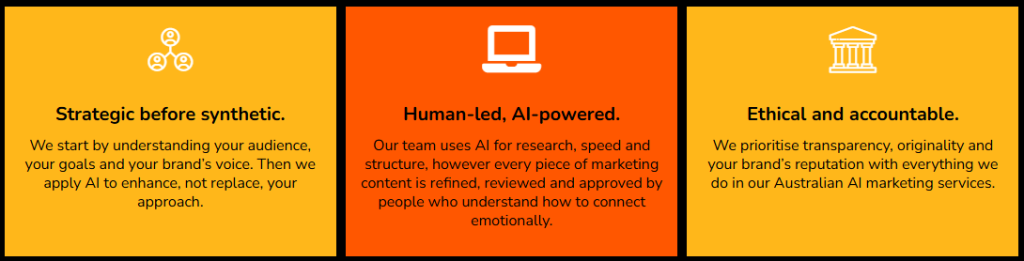
But that’s not where the real opportunity sits. Because the brands getting the best results aren’t choosing sides – they’re combining strengths.
The hybrid model is where real performance happens
AI brings speed, scale and data-driven precision. Humans bring strategy, creativity and emotional intelligence.
On their own, each has limitations. Together, they create a far more effective system.
This is where the hybrid model comes in.
It starts with human-led thinking – defining the strategy, understanding the audience and shaping the message. From there, AI can support execution by accelerating content production, analysing performance and identifying opportunities to optimise.
Then it comes back to human input – refining, aligning and elevating the output so it resonates.
It’s not a linear process. It’s a loop of strategy, execution and refinement. And when done properly, it creates content that is both efficient and effective.
AI works best as a tool, not the driver
AI is powerful (no doubt about it), but it doesn’t replace thinking.
It doesn’t fully understand context the way a human does. It can’t make judgement calls around brand nuance, customer emotion or long-term positioning (the stuff that actually makes marketing work).
That’s why its role needs to be clear:
- support ideation and research (great for getting the ball rolling)
- assist with drafting and structure (hello, first drafts)
- enhance efficiency in production (faster, not necessarily better)
- provide data-driven insights for optimisation (numbers don’t lie… mostly)
But the direction, the decisions and the final message? That still sits with people. (Always!)
Because when AI starts driving, content can quickly feel generic… predictable… a bit “same same”.
Use it as a tool? That’s when it becomes powerful!
Balancing efficiency with creativity is the real advantage
AI has made it easier than ever to produce more content.
But more content doesn’t equal better results.
The real advantage comes from balancing:
- efficiency (what AI does best)
- creativity and connection (what humans do best)
This balance ensures that content is not only produced faster, but also performs better.
Because while AI can help get your message out there, it’s human insight that makes people care.
Chapter 10: How to Actually Use AI in Your Content Strategy

By now, one thing should be clear. AI isn’t the strategy. It’s part of the system. So, the real question becomes – where does it actually fit, and where does it not?
Where AI fits in your content workflow (and where it shines)
AI is at its best when it’s supporting execution and accelerating processes.
Think of it as your behind-the-scenes engine – helping you move faster, spot opportunities and scale output without burning time.
In a practical sense, AI can be used for:
- Research and insights: analysing trends, summarising information and identifying content opportunities
- Ideation and planning: generating topic ideas, angles and rough outlines to kickstart the process
- Content drafting: building first drafts or frameworks that can be refined later
- Scaling content: repurposing blogs into social posts, emails or variations for different platforms
- Performance optimisation: reviewing data, identifying patterns and suggesting improvements
This is where AI delivers real value – speed, efficiency and support.
But it’s important to recognise what it’s not doing.
- It’s not setting direction.
- It’s not defining your brand.
- It’s not making strategic decisions.
Where humans lead (and what to avoid)
This is where the difference between average and high-performing content really shows.
Humans lead the parts of content marketing in Australia that require:
- Strategy: defining goals, audience and overall direction
- Messaging: shaping how your brand communicates and what it stands for
- Positioning: ensuring your content is distinct, relevant and aligned with your market
- Emotional connection: understanding what your audience feels, not just what they do
Without this layer, content may be technically correct… but ineffective.
So, when using AI, there are a few practical guardrails to keep in mind.
Do:
- use AI to support your process, not replace it
- provide clear inputs (context, tone, audience) to improve outputs
- refine and edit everything to align with your brand
- combine AI insights with human judgement
Don’t:
- publish AI-generated content without review
- rely on AI to define your strategy
- chase volume at the expense of quality
- assume speed equals effectiveness
The goal isn’t to produce more content, it’s to produce better content consistently.
AI can help you get there faster, but it’s human expertise that ensures you’re heading in the right direction – and when both works together, that’s when your content strategy starts to deliver REAL results.
Conclusion: The Future of Content Isn’t Artificial, It’s Amplified

If there’s one thing to take away from this guide, it’s this: AI isn’t replacing content marketing, it’s raising the standard.
Because now, it’s easier than ever to produce content.
But harder than ever to make it matter.
The brands that will lead aren’t the ones pumping out the most content (we’ve all seen where that goes).
They’re the ones using AI to work smarter, while doubling down on what connects – strategy, clarity and human insight.
This is where the shift is happening.
- From speed to substance
- From volume to value
- From automation to amplification
Because AI can help you say more… but only humans can make it mean something.
And that’s the difference.
It’s the difference between content that fills space and content that builds trust.
Between messages that get ignored and messages that move people.
At Melotti Content Media, this is exactly how we approach AI.
Not as a shortcut (because it’s not), but as a strategic advantage that enhances how we think, create and deliver results for our clients.
How can Melotti Content Media help you make AI work for your content?
If you want to get real results from AI, you need more than tools and prompts – you need strategy, direction and a clear understanding of how it all fits together.
Because let’s be honest… AI on its own can only take you so far.
Without the right messaging, positioning and human insight behind it, content can quickly become generic, disconnected and easy to ignore.
That’s where we come in.
At Melotti Content Media, we help you bridge the gap between AI efficiency and human-led strategy – so your content doesn’t just get produced, it performs.
As your Sydney Copywriters, Message Marketers and Brand Strategists, we:
- define your content strategy and positioning
- guide how AI fits into your workflow (properly, not randomly)
- craft messaging that connects with real people
- and execute content that drives clarity, engagement and results
So, while AI helps accelerate the process, we make sure everything is aligned, intentional and built to convert.
Because at the end of the day, it’s not about using AI. It’s about using it well.
Let’s start turning your content into a true growth driver.
To speak to your trusted message marketers and Australian copywriters, contact our team at Melotti Content Media today:
AI is refining how brands connect with audiences – making marketing more efficient, but also more competitive.